
About the Journal

“Global Forests” is a peer-reviewed, open-access journal published biannually, dedicated to advancing forest and environmental sciences through original research, reviews, mini-reviews, and short communications from both local and international scholars. The journal emphasizes innovative, hypothesis-driven and interdisciplinary research covering key areas such as; Forestry, Forest Science, Sustainable Forest Management, Silviculture, Forest Inventory and Monitoring, Forest Planning and Policy, Forest Economics, Forest Certification, Forest Engineering, Community Forestry, Urban Forestry, Agroforestry, Social Forestry, Forest Ecology, Ecosystem Ecology, Forest Biodiversity, Biodiversity Conservation, Conservation Biology, Landscape Ecology, Landscape Conservation, Population Ecology, Species Diversity, Endangered Species Conservation, Ecosystem Services, Climate Change, Climate Change Impacts on Forests, Carbon Sequestration, Forest Carbon Dynamics, Climate Adaptation and Mitigation, Greenhouse Gas Assessment, Environmental Science, Environmental Management, Environmental Monitoring, Environmental Sustainability, Natural Resource Management, Ecological Restoration, Plant Ecology, Plant Physiology, Plant Taxonomy, Plant Genetics, Forest Genetics, Forest Tree Improvement, Plant Biotechnology, Seed Science, Tree Physiology, Forest Soils, Soil Conservation, Forest Soil Microbiology, Watershed Management, Water Quality, Forest-Water Interactions, Range Management, Rangeland Ecology, Rangeland Conservation, Grassland Ecology, Grassland Restoration, Pasture Management, Grazing Management, Silvopastoral Systems, Livestock–Forest Interactions, Rangeland Biodiversity, Rangeland Monitoring, Dryland Ecosystems, Arid and Semi-Arid Land Management, Forage Production, Forage Science, Sustainable Grazing Systems, Desertification Control, Land Degradation and Rehabilitation, Watershed and Rangeland Management, Remote Sensing, Geographic Information Systems (GIS), Global Navigation Satellite Systems (GNSS), Spatial Analysis, Forest Mapping, LiDAR Applications, Drone/UAV Applications, Geospatial Modeling, Forest Health, Forest Pathology, Forest Entomology, Invasive Species, Pest Management, Disease Management, Fire Ecology, Wildfire Management, Forest Risk Assessment, Reforestation, Afforestation, Forest Landscape Restoration, Protected Area Management, Habitat Rehabilitation, Nature-Based Solutions, Renewable Forest Resources, Bioenergy, Biomass Utilization, Circular Bioeconomy, Sustainable Development, Sustainable Development Goals (SDGs), Green Infrastructure, Ecosystem-Based Adaptation, Environmental Policy, Wood Science, Timber Technology, Wood Engineering, Non-Timber Forest Products (NTFPs), Forest-Based Industries, Wood Quality, Biomaterials, Pulp and Paper Science, Ecological Modeling, Forest Growth Modeling, Artificial Intelligence in Forestry, Machine Learning Applications and Decision Support Systems in Forestry, Environmental Informatics, Forest Governance, Environmental Economics, Environmental Education, Conservation Policy, One Health and Forest Ecosystems, Ecosystem Resilience, Forest-Based Climate Solutions, Sustainable Land Use, Ecological Risk Assessment, Environmental Biotechnology, Sustainable Resource Utilization, Global Environmental Change, Nature Conservation.

Current Issue

Vol. 5 No. 01 (2026): Global Forests
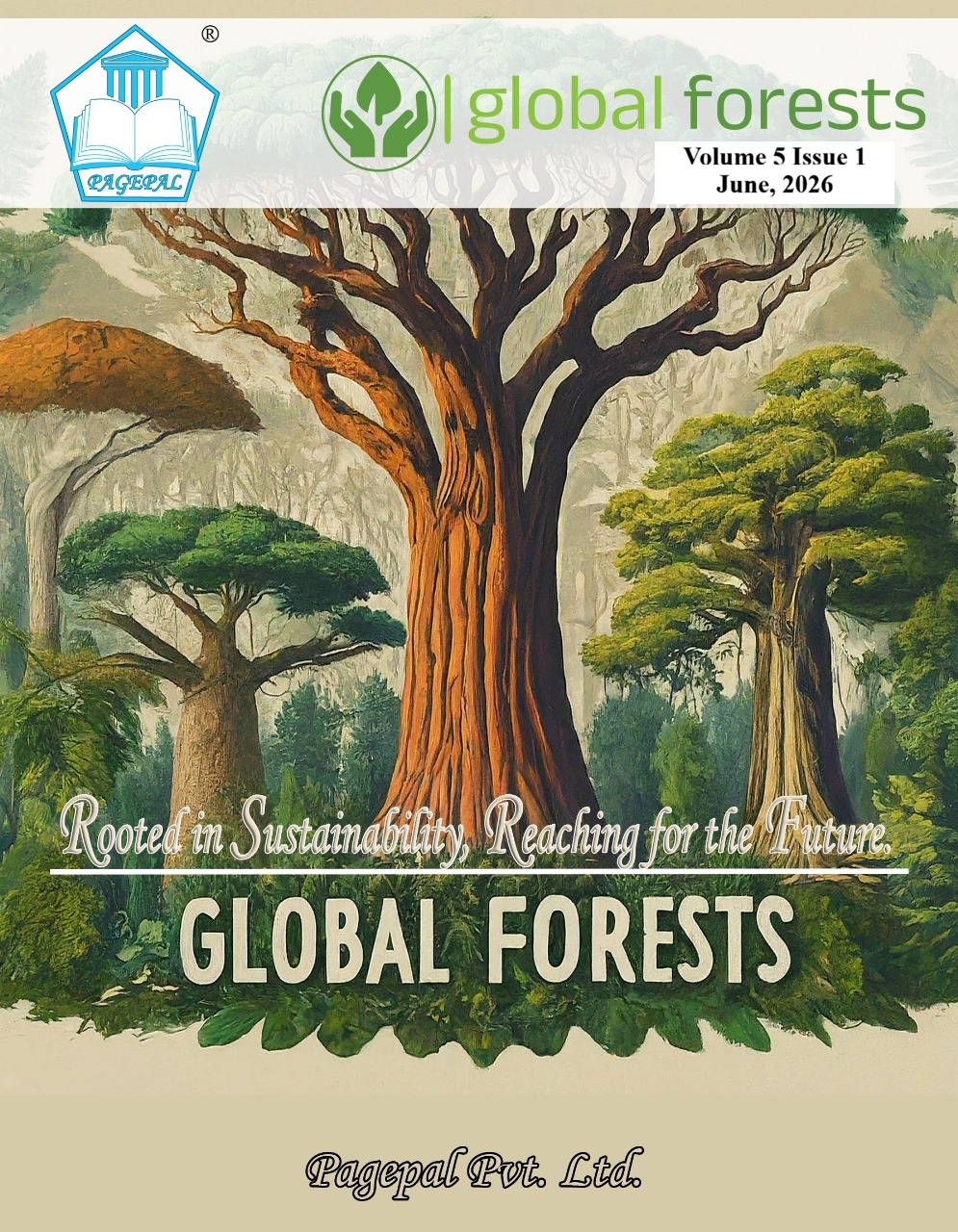
					View Vol. 5 No. 01 (2026): Global Forests
Published: 2026-06-30

Articles

View All Issues

The Global Forest: A Vital Network of Life

Forests are not merely collections of trees; they are the lungs of our planet, intricate ecosystems teeming with life and playing a critical role in maintaining the delicate balance of Earth. They exist in a vast and diverse tapestry across the globe, each region boasting unique characteristics and species.

A Tapestry of Trees: From the towering redwoods of California to the lush rainforests of the Amazon, the global forest encompasses a staggering variety of trees. Each species is uniquely adapted to its environment, thriving in deserts, mountains, and wetlands. This diversity is a testament to the resilience and adaptability of life on Earth.

The Lungs of the Planet: Through the magic of photosynthesis, forests absorb carbon dioxide, a greenhouse gas, and release life-giving oxygen. They are essential for regulating the Earth's climate and ensuring a breathable atmosphere for all living things. Imagine a world without vast forests – it would be a suffocating reality.

A Haven for Biodiversity: Forests provide a sanctuary for a staggering array of creatures. From the majestic tigers of Siberia to the colorful birds of the Amazon, countless animals rely on forests for food, shelter, and breeding grounds. The loss of forests leads to a decline in biodiversity, disrupting the delicate web of life.

A Shield Against Soil Erosion: The root systems of trees act as anchors, holding the soil in place and preventing erosion. They also create spaces for beneficial microbes and fungi to thrive, further enriching the soil and creating fertile ground for future plant growth.

Threats to the Global Forest: Deforestation, driven by human activities like logging, agriculture, and development, poses a serious threat to these vital ecosystems. Climate change further exacerbates these challenges, leading to wildfires, droughts, and disruptions in natural forest regeneration.

Preserving Our Green Legacy: The future of our planet rests on our ability to protect the global forest. Sustainable forestry practices, conservation efforts, and individual choices can all play a part. By planting trees, reducing our paper consumption, and supporting responsible companies, we can ensure that the global forest continues to thrive for generations to come.

The global forest is a precious resource, a network of life that sustains us all. Let's work together to safeguard this vital natural wonder for the benefit of our planet and all its inhabitants.